Sugar Program and the Farm Bill
By Klodette Stroh
My daily prayers are that American farmers have a good year where they produce safe food and fiber for the people of this great country.
U.S farmers have proven over and over again to feed our people and provide food for many around the world.
The importance of American sugar production
More than 100 countries produce sugarbeets or sugarcane.
The sugarcane sector produces about 80 percent of the world’s sugar demand, and India is the largest sugarcane producer.
In the U.S., the sugarbeet and sugarcane industries need each other to maintain balanced sugar production for the benefit of American taxpayers.
To meet America’s sugar needs, the U.S. Department of Agriculture (USDA) monitors the amount of sugar produced domestically, along with sugar supplied by more than 41 foreign countries which have been given access through trade agreements to import sugar into the U.S. market at or near duty-free rates.
America provides market access to 41 countries and is the world’s biggest sugar importer, which explains why so many developing countries support the current U.S. sugar policy.
Lessons from history
My mother used to advise us about the lesson’s history can teach us.
Looking back at the history of this beloved country, America was once largely dependent on foreign nations for sugar.
Sugar was rationed 84 years ago during World War II. After the war, the U.S. government encouraged sugar production at home to make sure Americans were never again without this critical food ingredient.
History taught us another important lesson in 1974, when the U.S. Sugar Act expired. The world price of sugar skyrocketed to 60 cents per pound, and American consumers suffered. Then, the price dropped to three cents per pound, forcing many sugarbeet and sugarcane farmers out of business.
However, consumers did not see savings in their food prices.
These examples show why it is important for the U.S. to protect a strong and reliable domestic sugar supply.
Sugar program and farm bill
To protect taxpayers from unstable sugar prices and supply insecurity, Congress included a sugar program in the farm bill in 1981. This program stabilized the price at a reasonable level and assured American consumers, along with large sugar users such as candy, cereal and soft drink makers, a reliable and high-quality supply of pure, natural sugar.
The last farm bill, passed in 2018, expired in September 2023 and is currently running on a one-year extension.
Congress negotiates a new farm bill every five years. The 2023 Farm Bill was extended in September 2023 to be negotiated in 2024 and has a price tag of $1.5 trillion attached to it.
A flood of imported, subsidized foreign sugar is putting American farms and jobs at risk and jeopardizing the secure supply chain for sugar.
On April 30, the U.S. House of Representatives passed the Farm, Food and National Security Act of 2026. Now it will be taken to the U.S. Senate.
Hopefully by the end of 2026 we will have a farm bill.
Sugarbeet production in the U.S.
Looking back to the history of sugarbeet production in America is very impressive to me.
Most sugarbeet crops are grown in the Western part of the U.S.
In 1902, federal irrigation projects were authorized by President Theodore Roosevelt to build dams and irrigation systems to grow crops and help populate the western states. Sugarbeets became one of the major crops grown by flood irrigation methods in cooler temperature areas.
Today, nine million tons of sugar are produced each year by 11,000 beet and cane farmers on two million acres.
Sugar creates more than 151,000 U.S. jobs in more than two dozen states and adds more than $23 billion to the U.S. economy.
The top states producing sugarbeets include Michigan, Montana, Idaho, Washington, Colorado, Nebraska, North Dakota, South Dakota, Minnesota, Oregon, California and my home state of Wyoming.
Approximately 1.1 million acres are used for sugarbeet production.
How sugar is made from sugarbeets
To understand why sugar policy matters, it is also important to understand the work and cost involved in producing sugar here at home.
The process of making sugar from sugarbeets starts with sugarbeet seed companies, which provide certified beet seeds to growers. The cost of sugarbeet seed is between $250 and $300 per acre, mainly because of Environmental and Protecetion Agency safety regulations. Fertilizer itself costs more than $280 per acre.
After sugarbeets are harvested, they are transported to a factory. Each load is weighed and sampled before being delivered to the piling areas. The beet sample is checked for soil tare, which is the amount of non-beet material delivered. The sample is also checked for sugar content, which is the amount of sucrose in the crop, and nitrogen content, which helps recommend future fertilizer use to the farmer.
From these elements, the actual sugar content of the load is calculated, and the grower’s payment is determined.
At the factory, the beet roots are washed, mechanically sliced into thin strips and passed through a machine called a diffuser to extract the sugar into a water solution.
The final step involves molasses, which has been extracted from sugarbeets. It is placed in a centrifuge to remove the liquid and produce pure granulated sugar.
The rising cost of farming
American farmers’ operating margins are being squeezed each year due to rising labor, fuel, seed, fertilizer, equipment and interest rate costs.
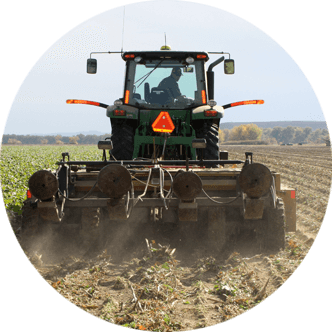
My husband Rick and I grow our crops with flood irrigation, and the cost of fuel at more than $5 per gallon is unbelievable.
American farmers are some of the most efficient farmers in the world in their practices, but we must keep in mind today’s high cost of production. For sugarbeet farmers in irrigated areas, production costs can be between $1,300 and $1,500 per acre.
Farming is a business, just like any other business. The cost of production has to be covered by the price of the commodity in order for farmers to keep farming. It is hard for any business to operate in the red. Low commodity prices drive American farmers out of production and into bankruptcy.
According to the American Sugar Alliance (ASA), 110 foreign countries subsidize their sugar production, consumption and trade in some way. This makes sugar one of the most heavily subsidized commodities and, therefore, distorted markets in the world.
Brazil, India and Thailand are the largest sugar exports in the world. They all heavily subsidize their own sugar producers, which helps drive global prices below the cost of production. India sugar producers received $17.6 billion sugar subsidies last year.
Please bear in mind, U.S. sugar producers support this kind of subsidy-free, free-trade system. It’s known as the zero-for-zero sugar policy and it operates at no-cost to U.S. consumers.
ASA stated, “Without American family farms and American factories which produce real sugar, America will be dependent on unreliable foreign suppliers for this essential food ingredient. Passing a farm bill is a critical step forward in ensuring we do not offshore our family farms or American food production.”
U.S. history has given us a good example to not make the same mistake again. Preserving American factory jobs, American family farms and a strong supply of an American-made ingredient is something worth fighting for.
U.S. farmers are the hand that feeds us and most of the world.
Klodette Stroh is the national sugar chairman of Women Involved in Farm Economics. She can be reached at strohfarms@tritel.net.