It’s the Pitts: Long May They Rein
by Lee Pitts
I continue undaunted in my quest to have the horse replace the bald eagle as our national symbol.
The horse, despite all it has done for us, is not even our national mammal. The bison is.
Ask yourself, how many of our war wagons through the ages have been pulled by either the bison or the bald eagle? How many of our plows and harvesters?
It wasn’t bison or bald eagles who made Lewis and Clark’s history – changing trek possible, and as I recall, Paul Revere wasn’t riding a bison or a bald eagle when he warned, “The British are coming, the British are coming.”
The bald eagle has been our national symbol since 1782, and at the time, it was a controversial choice.
None other than one of the smartest and most well-educated men of the times – Benjamin Franklin – objected vehemently to the pick. While it can’t be proven his first choice was the turkey as has been claimed, it was proven in a letter he wrote to his daughter he thought the choice of the bald eagle was stupid.
He wrote, “For my own part, I wish the bald eagle had not been chosen the representative of our country. He is a bird of bad moral character. He does not get his living honestly. Besides, he is a rank coward.”
Is this what we want to represent our country? It’s one of the few bad choices our Founding Fathers made.
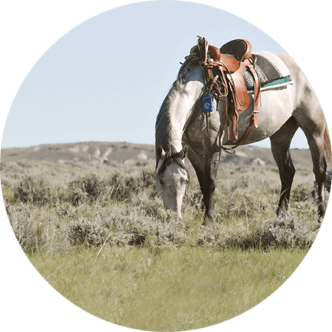
Our national symbol should be the horse, of course.
The horse is as perfect as a species could possibly be, and there’s no existing mammal on Earth that is older than the horse. The genus Equus has been a resident of our planet for 40 million years longer than man.
Just consider, without the horse there would be no Kentucky Derby, no Professional Rodeo Cowboys Association, no jackpot ropings, no Budweiser Clydesdales and maybe even no cattle business.
Greek chariots were pulled by horses 1,500 years before the birth of Christ.
For Native Americans, the words “horse” and “power” were synonymous, and status in the Tribe was determined by how many horses they owned. Some Tribes called horses “God dogs,” such was their importance to daily life.
The Pony Express – made possible by the horse – did a better job bringing the mail than our present-day post office does.
In the days of the missions, a horse was worth 30 head of cattle, which tells us a lot about their standing in the days of the Dons.
For thousands of years, the horse was the most precious and noble gift a person could bestow or receive.
In 1900, 130,000 horses worked in the streets of Manhattan, N.Y., which is 10 times the number of yellow cabs there today.
I have a photo of 32 horses pulling one grain harvester, and I counted at least 19 such harvesters working in one field at the same time.
Horses fed our country and died in our wars, 1.5 million of them dying in the Civil War alone.
I could go on and on like this documenting what the horse did to build this nation.
Just name me one thing the bald eagle has done other than look good on our coins, flags and letterheads.
The eagle is supposed to represent freedom, strength, independence and authority while, in fact, it is a carrion which steals prey from other predators and eats several endangered species.
It tears flesh with its razor-sharp talons from seals, otters, mink, rabbits, foxes, birds, lambs, deer, turtles and over 400 other species. It also scavenges in garbage dumps, eats rotting whale meat and violently attacks dogs and cats from the sky.
My next-door neighbor watched in terror as a bald eagle that haunts our skies swooped down and grabbed his cat Jessie. As Jessie fought for its life, the eagle dropped the cat from the sky to kill it, then it flew down, picked up the beloved pet – which wasn’t fighting anymore – and, no doubt, consumed it bit by bit.
The bald eagle is a smelly, predatory, opportunistic carnivore, while the horse is a herbivore, which, while it may dislike dogs, cows and cowboys, it doesn’t rip them apart limb by limb – most of the time anyway.