Planting strategies for increasing corn yields outlined
Effective management practices during planting can help corn growers maximize their field potential and capitalize on yields.
“High yields are built on uniform stands which emerge quickly and evenly, supported by careful attention to soil conditions, weather forecasts and planter performance,” says Extension Corn Specialist Dan Quinn in a March 13 Perdue University Extension Entomology Pest and Crop newsletter. “While weather patterns, soil conditions and individual farm logistics will vary, the decisions made during planting will set the stage for everything that follows.”
As the growing season approaches, industry experts and leading farmers share practical planting strategies to help 2026 corn yields reach new heights.
Soil considerations
In the Midwest, the ideal corn planting window usually falls between late April and early May, after soil temperatures consistently reach roughly 50 degrees Fahrenheit.
Quinn says successful corn yields are built from the ground up and emphasizes the importance of soil conditions at planting.
He explains soil conditions impact crop uniformity, which is important because corn plants that emerge at different times compete unevenly for light, water and nutrients. Even small differences, Quinn cautions, can reduce yield potential across a field.
“Soil temperature, soil moisture, seed-to-soil contact and seed depth all interact to influence how quickly and consistently seedlings emerge,” Quinn writes.
In terms of temperature, Quinn notes overly cool and highly variable soil temperatures – especially when hovering near the lower end of 50 degrees Fahrenheit – can delay emergence, prolong seedling exposure to various stressors and result in uneven stands.
Similarly, Quinn observes inconsistent soil moisture caused by residue cover, variable soils or fluctuating weather can delay some plants and weaken performance.
For these reasons, monitoring soil temperatures at planting and the weather forecast in the days to follow while paying close attention to factors like seed spacing and depth can help planters get the most out of their crops.
Seed factors
Strategically selecting the correct seed genetics for the region and planting effectively is also crucial to achieving higher yields.
“Choosing resilient genetics can help producers deal with unpredictable weather and environmental changes,” reads an April 21, 2025 CROPLAN newsletter titled “Six Ways to Help Maximize Your Corn Yields.”
“The four key components of yield are plants per acre, ears per plant, kernels per ear and kernel depth and density,” the article continues. “Since kernel depth and density are determined later in the season, it’s essential to continue managing performance through those later stages of growth.”
Additionally, Quinn reminds producers inconsistent seed depth can increase variability in germination and early growth.
“The planter’s job is to place every seed at a consistent depth, consistent moisture, in firm contact with the soil and with uniform spacing from its neighbors,” Quinn writes.
“Poor seed-to-soil contact due to residue interference, sidewall compaction from planting in wet conditions or improper furrow closure can further compound issues,” he continues.
Crop protection
Insects, weeds and crop diseases are consistent threats to higher yield, and managing these threats can lead to greater success.
Clearing crop residue is an important first step in disease and insect management, as pests thrive in leftover growth and their presence can make it difficult for emerging crops to compete.
Fungicides can help protect plants from yield-reducing diseases and insects, and experts with Bayer Crop Science recommend developing a management plan for individual fields which incorporate cultural, mechanical and chemical methods of pest control.
In addition, CROPLAN highlights the importance of early weed control, cautioning against waiting too long to apply post-emergence products or using inadequate pre-emergence herbicides.
CROPLAN also recommends scouting fields early in the growing season and during critical growth seasons to keep tabs on disease and insect populations to avoid potential yield losses.
Equipment
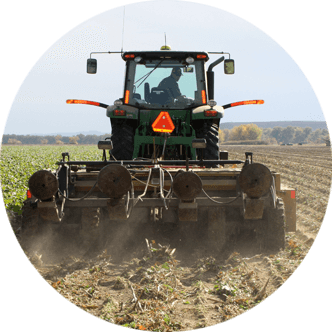
Finally, experts agree using the right equipment and keeping it in good shape can help corn growers maximize their yield potential.
“As equipment decisions are made ahead of the 2026 season, investments should be guided by specific stand establishment challenges already observed in individual fields,” Quinn says, noting specific issues with factors like inconsistent depth or residue interference may require adjusting or updating equipment.
“Just as importantly, routine maintenance remains critical,” he adds. “Worn components, improperly adjusted systems and overlooked mechanical issues can undermine planting performance as much as – or more than – the absence of the latest technology.”
Experts also recommend reducing traffic over fields, as large equipment can lead to increased soil compaction, and maintaining soil structure is key to long-term productivity and increased yields on an annual basis.
Grace Skavdahl is the editor of the Wyoming Livestock Roundup. Send comments on this article to roundup@wylr.net.