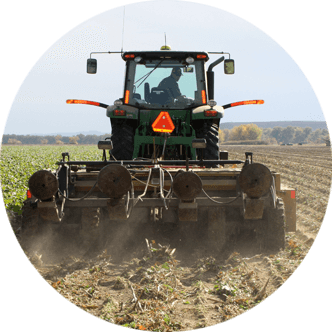
Organic Grown versus Conventional Grown
From the Publisher Dennis Sun
As consumers shop in grocery stores for vegetables, most select conventionally-grown products.
Sometimes, when I get to the last vegetable stand and see it is labeled organic, I stop and wonder if I’m cheating myself and my family by not buying organic products, but I see the higher cost, think to myself, “What the heck,” and head to checkout.
I read when it comes to choosing between organically-grown and conventionally-grown vegetables, the answer depends on what your priorities are.
Usually, organic vegetables are grown without synthetic pesticides, herbicides or genetically-modified organisms.
Both organic and conventional vegetables are grown under strict guidelines set by the U.S. Department of Agriculture (USDA), but there are even more guidelines organic vegetables have to meet.
In some cases, conventional farming inputs are used for organic farming because an organic substitute simply doesn’t exist. In these cases, a deviation may be approved by the USDA’s National Organic Standards Board, so the crop can still be labeled organic.
There are no existing scientific studies showing one method of farming is better than the other, as both have their pros and cons.
Some of the pros of organic farming include less fertilizers and pesticides, which means lower chemical runoff and, in many cases, higher soil biodiversity.
On the other hand, organic farming usually requires more land due to lower average yields per acre. Depending on the crop or location, it could be up to 25 percent more land, which would result in a larger carbon footprint than conventional crops for the same pounds of vegetables grown.
It would be even more for frozen vegetables transported across the country.
In ideal growing conditions, organic yields can be comparable to conventionally-grown fields, but these conditions don’t exist all of the time.
Currently, the U.S. and the rest of the world don’t have enough arable land to replace fields with organically-grown products if we wanted to switch over.
One of the reasons organic vegetables are more expensive in the grocery store is the field yield difference – organics require more land.
Conventional inputs also make it easier to get higher yields from substandard soils. This would keep overall costs down, which would make vegetables cheaper to produce and hopefully cheaper to buy.
On the important issue of nutrition, studies have shown organic and conventional vegetables are broadly similar in terms of vitamins and minerals, although studies show organics may have slightly higher antioxidant levels.
Most importantly, it comes down to personal preference about which fruits and vegetables to buy.
We all need to eat more fruit and vegetables, just be sure to wash them really well.
We’re privileged to live in the U.S. where our food prices are the lowest in the world. World travelers are amazed at our grocery stores.
It’s the same as buying a Ford or Chevy, grain-fed or grass-fed beef and drinking water from a plastic or reusable water bottle – it’s up to you.