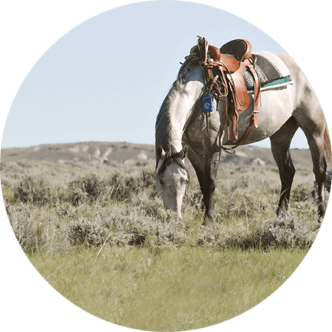
Fire Recovery: Johnson County comes together in aftermath of natural disaster
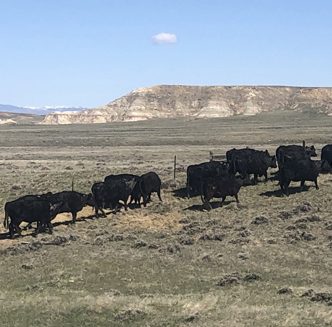
In August 2024, the House Draw Fire swept across Johnson County, ravaging roughly 175,000 acres of land in less than 48 hours.
Through the throes of the blaze, ranchers and locals worked tirelessly to locate livestock, cut fences and fight flames, saving lives and buildings as the fire surged.
The community continued to band together in incredible ways after the flames were extinguished, volunteering their time and resources, establishing the Johnson County Fire Relief Fund (JCFRF) and leaning on one another to heal.
Fire impacts
Dry lightning ignited the House Draw Fire southeast of Buffalo on Aug. 21, 2024. A combination of high wind, record-breaking temperatures and low humidity fueled the flames, and the fire grew rapidly.
The majority of acreage burned was privately-owned ranch land, resulting in damages and losses throughout several area ranches. The fire’s impact reverberated throughout Johnson County and was felt deeply by all, even by those who lost comparatively little to the flames.
Meg Scales, a local seedstock producer and co-organizer of the JCFRF, recalls the fire as a terrifying and heartbreaking experience. However, there were also glimmers of hope.
“Not a single home or person was lost in the fire,” Meg recalls. “I credit this outcome to the incredible neighboring and can-do attitude of our local ranch community.”
The proactive attitude of Johnson County residents continued in the fire’s aftermath as neighbors once again came together to focus on recovery efforts.
“If our community had not rallied to provide support, we may have seen some collapses of heritage ranches in the area, which was something none of us wanted to see,” says University of Wyoming (UW) Johnson County Extension Educator Micah Most. “The community’s resilience was incredible. It was amazing to see everyone come together.”
Outpouring of support
Even after the fire was extinguished, time was still of the essence and recovery efforts began immediately.
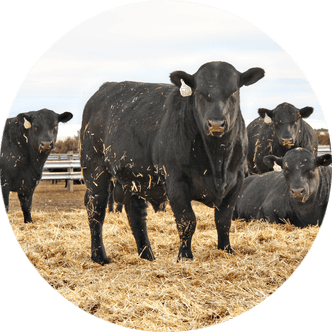
With animals affected, pastures destroyed and hay stores compromised, neighbors quickly banded together to donate hay, time, money and resources.
Through his role with Extension, Micah helped organize logistics and communication in the wake of the fire. He was called in to help coordinate hay donations started by area ranchers and says the outpouring of support was overwhelming.
“We had people who were affected by the fire themselves show up to donate hay and money to support their neighbors,” Micah recalls. “Everyone was so generous, even though they were facing losses themselves.”
In addition to hay donations, several local businesses donated portions of their proceeds to fundraising efforts.
Neighbors organized community events, including a “Rope for Hope” team roping in Kaycee, organized by Ashlea Bassett, to raise funds for fencing supplies, and volunteers pitched in to start rebuilding portions of the nearly 600 miles of wire and fenceposts damaged by the flames.
Executive orders signed by Gov. Mark Gordon, a Johnson County native himself, helped ease restrictions on transporting feed and livestock and support from federal disaster programs helped cost share in recovery efforts.
Additionally, local citizens banded together to establish the JCFRF to help organize immediate resources and coordinate assistance in areas not covered by government programs.
Johnson County Fire Relief Fund
JCFRF was spearheaded by Meg and Kassie Camino with support from local elected officials and community members.
Organized under the Johnson County Communities Fund – a local 501(c)(3) nonprofit – the JCFRF served as a central hub for distributing information and helping ranchers navigate recovery resources coming in from local, state and government efforts.
“There were so many resources being thrown at ranchers, so about a dozen of us got our heads together and began to look for ways to make the process easier for our friends and neighbors,” Meg recalls.
The JCFRF formed a producer advocacy subcommittee to help align resources with the actual needs of area ranchers.
Members helped coordinate lobbying efforts and served as liaisons to help producers navigate resources coming in from government assistance programs.
“It took a ton of pressure off of ranchers to identify exactly what they needed help with and give them information proactively,” notes Meg.
The subcommittee also helped organize and distribute funds coming in from local donations, which amounted to tens of thousands of dollars in relief money.
Ranchers were able to apply for financial assistance through the JCFRF to put towards expenses not covered by government programs or insurance.
“Reading through those applications was heart wrenching but also heartwarming,” Meg says. “Every single person who applied didn’t think they were worthy of it and thought their neighbor needed it more.”
Ashes to the Table
On Oct. 19, 2024, neighbors from across Johnson County gathered in downtown Buffalo for the Ashes to the Table Community Dinner and Dance.
Hosted by the JCFRF and community partners, the event fed an estimated 1,000 people who joined together for a night of community and fundraising.
The evening was a huge success, garnering attention across social media and Fox News and raising over $81,000 in donations.
Additionally, the event brought neighbors together to reflect on community, enjoy each other’s company and heal.
“There’s a lot of love in our community and such a ranching spine to Johnson County,” says Meg. “The Ashes to the Table Dinner was very cathartic. A huge part of it was letting people heal.”
Continued hope
Nearly a year and a half after the House Draw Fire, the community and landscape across Johnson County continue to heal.
Meg says the final round of funding organized under the JCFRF will be distributed to ranchers in January 2026, after which the Johnson County Communities Fund will return to its original status as a community nonprofit.
Rangeland recovery is a slow process, but Micah says a good rainfall last summer has helped encourage growth.
“The native perennial grasses are coming back pretty vigorously,” he says. “It’s going to take a few more years of consistent moisture, but I think we’re on the right track.”
Monitoring and preventing the spread of invasive grasses like ventenata and cheatgrass remains a top priority, and Micah applauds the efforts of the Johnson County Weed and Pest Board in managing this threat.
Additionally, Micah says
support from government agencies and nonprofits – including the Natural Resources Conservation Service, Bureau of Land Management and local conservation districts – has been instrumental to supporting wildlife recovery.
“A lot of partners have collaborated on recovery efforts,” Micah says. “From what I’ve seen, things are coming back – hopefully even stronger than they were before.”
Grace Skavdahl is the editor of the Wyoming Livestock Roundup. Send comments on this article to roundup@wylr.net.