December drought conditions impact agriculture across the U.S.
According to the National Drought Mitigation Center’s (NDMC) December 2025 Drought Climate Summary, published on Jan. 26, much of the West and western Great Plains were warmer and drier than usual during the last month of 2025.
These conditions align with drought felt across large portions of the U.S., which has resulted in widespread impacts to agriculture and wildlife in particular.
Conditions across the High Plains
According to NDMC, states located in the High Plains Region saw a mixed bag of drought degradations and improvements.
“Southeast Kansas and portions of Nebraska saw one- and isolated two-category degradations during December. A few one-category improvements occurred in portions of Colorado, but mostly one-category degradations or no changes occurred across the state,” NDMC reports. “A one-category improvement occurred in northeast South Dakota as well.”
In Wyoming, the southeast half of the state saw one- and two-degradations, while the north-central and western parts of the state had one- and two-category improvements.
Overall, NDMC notes most of the High Plains were warmer and drier than usual, with areas of Kansas, Nebraska and eastern Colorado receiving less than one-quarter of normal precipitation for the month.
Wyoming in particular saw temperatures of up to 12 degrees Fahrenheit or more above normal in the central and western portions of the state, while snow water equivalent (SWE) numbers across south-central and southeast Wyoming struggled.
Northwest Wyoming, on the other hand, had a much wetter December than normal, with SWE numbers near or above normal in areas of the Wind River and Wyoming ranges.
“Across the High Plains, abnormal dryness or worse grew from 44.15 to 52.23 percent and moderate drought or worse grew from 19.22 to 23.47 percent, while severe drought or worse dropped from 7.23 to 6.29 percent and extreme drought or worse dropped from 1.32 to 1.13 percent,” the NDMC report reads.
“A small amount of exceptional drought developed near the end of December, covering 0.11 percent of the region at the end of the month,” it continues.
Agricultural impacts
In the December 2025 Drought Impacts Summary, a separate report also published by NDMC on Jan. 26, the service notes widespread drought impacts were felt during the month of December, most of which were largely related to water quality and supply, agriculture, plants and wildlife.
On the ag front, Christmas tree growers along the East Coast and across the Midwest reported damage to young trees, especially in New Hampshire and Wisconsin.
Similar losses were seen in Michigan, one of the nation’s top Christmas tree producing states, where drought impacts prompted Michigan State University Extension specialists to begin assisting growers with mulching and irrigation strategies to protect trees from increasingly erratic precipitation patterns.
Specialty crops were also hit hard.
NDMC notes Maine’s wild blueberry industry, which produces nearly all of the nation’s supply, lost an estimated $28 million due to drought-related crop losses, with production falling to 55 million pounds in 2025 – well below the typical average of 80 million pounds.
Additionally, dry conditions in late summer and early fall resulted in smaller pecans in Illinois; Ohio producers reported poor winter wheat germination and emergence and peanut yields in part of Florida dropped dramatically, falling to roughly 300 pounds per acre compared to typical yields of 3,500 to 4,000 pounds.
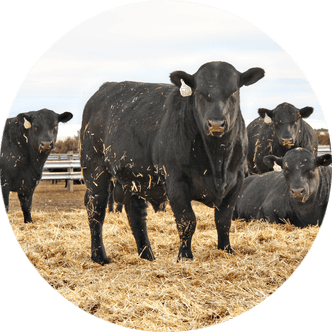
Livestock producers also faced mounting challenges in December as drought reduced forage availability and water supplies.
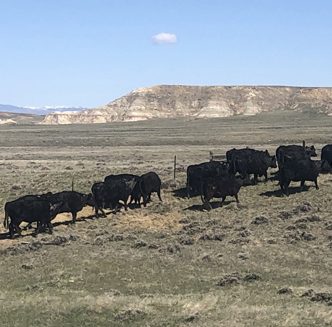
According to NDMC, producers in Wyoming and the South-Central Region reported severely degraded pastures, dry reservoirs and declining livestock water sources.
“In Wyoming, producers in Sublette, Goshen and Washakie counties reported severely degraded pastures, dry reservoirs on public grazing lands and increased dependence on supplemental feed,” the report reads.
Similar conditions were reported across Alabama, Kansas, Missouri, Oklahoma, Louisiana, Florida and Texas where feeding hay early, livestock relocation and herd reductions are becoming increasingly common.
These drought-driven herd reductions are also rippling through the broader ag economy.
In December, JBS announced the permanent closure of a beef processing plant near Los Angeles, citing rising costs tied to shrinking cattle supplies.
“The facility’s closure in February 2026 will eliminate 374 jobs, as beef prices hit record highs due to persistent drought causing ranchers to reduce herd sizes,” the report notes.
Water shortages and wildlife woes
December drought conditions also strained water supplies and disrupted ecosystems across the U.S., prompting conservation measures, burn bans and growing concerns for wildlife.
Water shortages were widespread across Florida, where a Phase One Water Shortage went into effect on Dec. 1, 2025 and is set to remain through July 1.
Low reservoirs across the Tampa Bay area have forced the city of Tampa to begin purchasing water months earlier than normal, while conditions have also led to burn bans across several Florida counties and cities, reflecting heightened wildfire risk.
Drought conditions extended northward along the East Coast.
In Georgia, Lake Hartwell and Lake J. Strom Thurmond reached drought trigger levels in early December; in North Carolina, parts of the Keowee-Toxaway Basin moved into Stage One drought status; in New Jersey, reduced precipitation and falling groundwater supplies led officials to issue a statewide drought warning in early December and in Pennsylvania, drought watches were declared across 37 counties, leading water providers to ask customers to reduce consumption by up to 15 percent.
NDMC notes drought impacts were also evident in wildlife populations and natural ecosystems, particularly in the Southwest.
Consecutive weak monsoon seasons and poor winter rainfall in Arizona and New Mexico left plants unable to produce nectar and seeds, pushing birds outside of their typical ranges in search of food and water.
Oak trees in the region failed to produce normal acorn crops, removing a key food source for wildlife, while widespread tree mortality was reported in drought-stressed woodlands.
Dry conditions increased wildfire risk across the West and South as well.
Fireworks restrictions were implemented in parts of New Mexico and Texas, while Colorado officials responded to an emerging mountain pine beetle outbreak tied to drought and warming temperatures.
Elsewhere, drought contributed to declining golden eagle populations in Nevada, prompted changes to fish stocking practices in Utah and caused tree die-offs and falling water levels in Louisiana parks, further highlighting the ecological toll of prolonged drought conditions nationwide.
Hannah Bugas is the managing editor of the Wyoming Livestock Roundup. Send comments on this article to roundup@wylr.net.