Slow the Flow: Ranchers rally for reduced speed limits near livestock drives
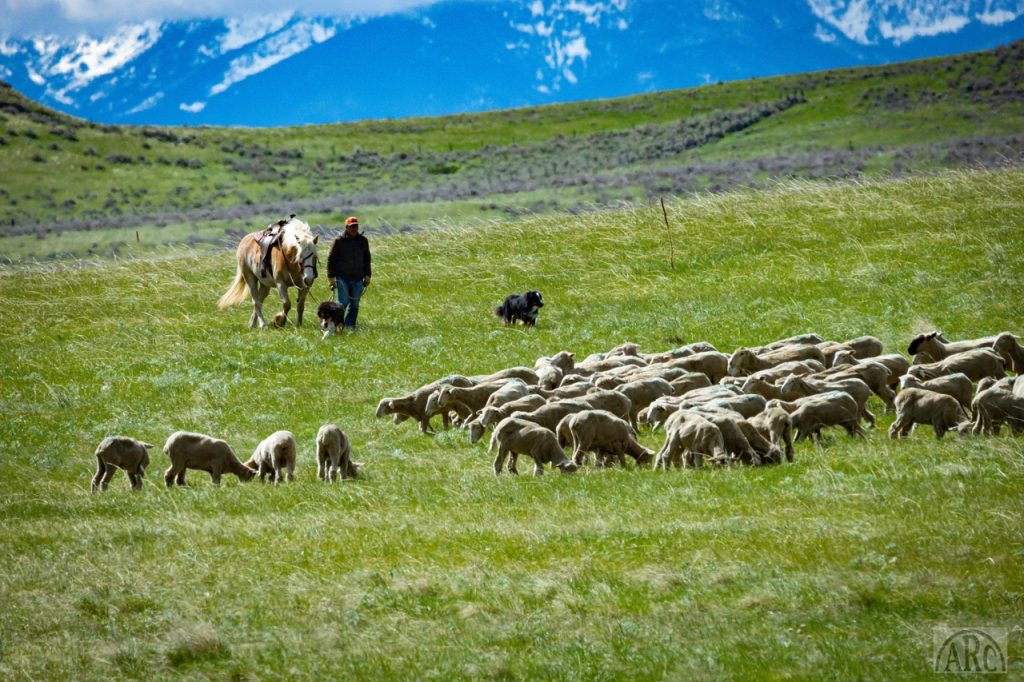
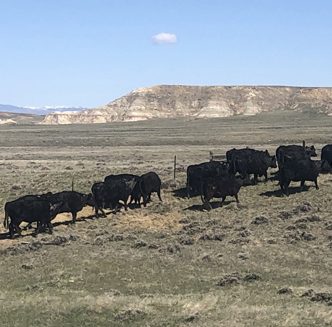
Following an incident which claimed the life of a working border collie last fall, ranchers and concerned citizens are garnering support to propose legislation which would require reduced speed limits in areas of livestock drives.
Sublette County Rancher Rachel Misiewicz recently spearheaded a petition calling for the passage of “Flo’s Law,” which would require motorists to reduce speed to 25 miles per hour (mph) when encountering livestock drives on public roadways and establish a $3,000 fine for failure to comply.
The petition also calls for clear road signage in livestock-heavy areas and the inclusion of livestock safety education in Wyoming tourism and travel materials, and it has been met with support from several industry leaders and community members.
Flo’s Law
Agriculture and tourism are two of Wyoming’s
biggest industries. Although the two mostly coexist peacefully, failure to abide by commonsense practices and safety precautions can lead to catastrophic outcomes.
In the fall of 2025, Misiewicz was moving cattle off of public land in Sublette County down Highway 189 when a tourist from Texas failed to slow down enough in the presence of livestock.
The tourist struck and killed Flo, a working border collie who was just 11 months old at the time.
The loss was emotionally and financially significant, Misiewicz says. She emphasizes a good working dog can cost tens of thousands of dollars and can replace the help of multiple human counterparts.
“There’s an expression that a good cow dog replaces three cowboys, and its actually very true,” says Misiewicz, noting the initial expense of investing in a working dog usually pays off in the long run by saving ranchers “a bundle of money” in labor expenses.
When motorists fail to slow for livestock it puts lives at risk – both human and animal – and threatens ranchers’ livelihoods.
“Ranchers and riders have the legal right to move livestock. Working dogs are essential partners, not disposable animals,” reads the petition. “Slowing down for a few minutes can prevent death, trauma and lifelong loss.”
The petition urges Wyoming legislators to sponsor and pass Flo’s Law, emphasizing its provisions are not about punishment, but rather prevention, respect and accountability.
“This is not a partisan issue,” adds Misiewicz. “It’s an animal and human welfare issue.”
Proposed changes
Launched on change.org, the petition proposes enforcing a speed limit of 25 mph in the presence of cattle, horses, riders or active livestock drives on public roadways and calls for legal repercussions when this standard is not met.
Misiewicz says the proposed fine of $3,000 pales in comparison to the cost of a potential loss of life.
“Making the fine $3,000 seems like a low price to pay compared to the consequences of killing someone,” she says.
Increased signage reading “Flo’s Law – Slow the Flow – Protect Our Families and Livelihood” in livestock-heavy areas is also a proposed measure, along with including livestock-safety education in Wyoming tourism and travel materials.
These actions will hopefully result in a more educated and aware public, according to Misiewicz.
Misiewicz acknowledges accidents do happen, but in her experience working on ranches throughout a seven-state area, she’s seen multiple close calls and tragedies she believes could have been prevented by stricter speed limit laws and increased public awareness.
“It’s a problem in every state, and I would love to see Wyoming do something about it,” she says, emphasizing a hope the Cowboy State can lead the way for reform in other ag-dependent states.
Ranchers react
Stacy Saunders, a rancher based in Sublette County, has a personal connection to the factors driving the petition and hopes to see Flo’s Law become statute.
Saunders lives on River Bend Ranch, a cattle and horse operation located alongside Highway 191 in Bondurant.
The ranch has pastures on both sides of the pavement, making moving livestock along the public roadway unavoidable.
The speed limit is currently 70 mph, but Saunders says travelers sometimes reach speeds of up to 80 mph on the straight stretch of road which runs parallel to the ranch.
Around 10 years ago, Saunders says her husband Tony and two young children were moving cattle when a traveler hit and killed their beloved dog, a working border collie cross named Roxie.
“We had kids and cowboys on horses, as well as dogs and a couple hundred head of cattle,” Saunders recalls. “You’d think people would have the commonsense to slow down with so much going on, but that was not the case.”
Saunders remembers Roxie as “a cool, smart little dog” who was a beloved member of the family and a valuable asset to the ranch.
The motorist’s refusal to slow down for just a few minutes erased years of training and bonding and delivered a blow which is still felt today.
“It’s horrible to lose a dog, but we are thankful it wasn’t a kid,” she continues.
Saunders adds the combination of “excessive speed limits” and ignorance has led to tragedy for her family on more than one occasion.
In 2019, a fatal motor vehicle accident claimed the life of her father-in-law Bill Saunders, who was on his four-wheeler near the ranch’s entrance when he was struck by a vehicle traveling at high speed.
Saunders says the Bondurant community has been pushing for speed limit reductions for years, and she believes provisions like the ones outlined in Flo’s Law are integral to the safety of Wyoming ranchers.
“I think it’s an important proposal,” Saunders says. “I hope it passes – for the safety of everybody.”
Industry support
The Wyoming Wool Growers Association (WWGA) has also voiced support for the proposed legislation, placing specific emphasis on support for increased signage and the inclusion of all working dogs in the legislation.
“WWGA is in complete support of Flo’s Law becoming statute,” says WWGA Executive Director Alison Crane on behalf of the organization. “Anyone who has taken part in livestock trailing or road crossings when public roads are involved has been plagued with the concern of loss of life or catastrophic injury due to traffic that is unaware or not mindful of the Wyoming way of life.”
“Not only do we support Flo’s Law as written in the petition, we would like to see all working dogs included in this legislation including sheepherding and livestock protection dogs,” Crane continues. “More signage is a necessity in trailing and crossing areas as well as education for tourists in Wyoming, especially when visiting our public land areas.”
So far, the petition has garnered nearly 600 individual signatures, reflecting a widespread sentiment of support for its proposals and is set to be presented to the Wyoming Legislature once it surpasses 5,000 signatures.
Grace Skavdahl is the editor of the Wyoming Livestock Roundup. Send comments on this article to roundup@wylr.net.