Kansas State University Beef Cattle Institute experts discuss fog fever in cattle
Although it is an illness which tends to affect cattle in fall months, acute bovine pulmonary edema and emphysema – commonly referred to as fog fever – was a topic of discussion during a recent edition of the Kansas State University (KSU) Beef Cattle Institute (BCI) Cattle Chat podcast.
In the Jan. 9 episode, KSU Clinical Assistant Professors Dr. Todd Gunderson and Phillip Lancaster took turns discussing a listener question posed by Dr. Glenn Gamble of Riverton regarding management strategies for combatting fog fever in cattle.
Overall, the experts agree introducing cattle to new forage environments gradually is the best course of action when it comes to preventing fog fever.
Causes and symptoms
As noted in a Sept. 13, 2021 article written by North Dakota State University (NDSU) Extension titled “Sudden Change in Diet May Cause Bovine Fog Fever,” fog fever is a rapidly-developing respiratory condition which occurs in cattle following sudden changes in forage.
It often occurs in the fall due to an increase in tryptophan levels throughout lush, rapidly-growing pastures and usually develops in the first two weeks after moving animals from dry forages – including overgrazed pastures and/or dry feed – to lush grasses.
“Animals diagnosed with fog fever have lung damage due to metabolites produced by the rumen micro flora in response to the rapid change in diet from dry, mature grasses and forages to the higher moisture, lush growth found in grasses, alfalfa, some meadow forages and even some species of brassica cover crops,” says NDSU Extension Veterinarian Dr. Gerald Stokka. “The change in diet results in metabolites of the naturally occurring amino acid tryptophan.”
Symptoms of an outbreak include labored breathing, extended head and neck and frothing of the mouth. Once an outbreak is identified, it is often too late, as this strain of pneumonia does not respond to antibiotic therapy.
For this reason, proper herd management and risk-reduction strategies are important to consider before switching pastures.
Management strategies
In the Cattle Chat episode, Gamble poses a question regarding the potential impact of plant management in reducing fog fever throughout certain areas of Wyoming.
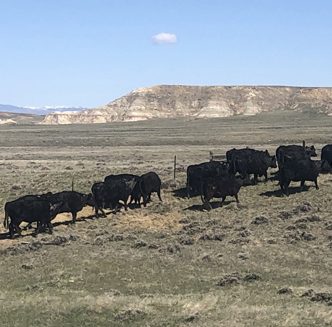
Gamble details instances of death loss after cattle were turned out to graze along a lush, boggy creek bank in Wyoming and wondered how to identify which plants were highest in tryptophan, as well as whether removing them from the area would be possible or helpful in reducing risk of fog fever.
The KSU BCI team agrees the answer to managing fog fever lies less with plant elimination and more with the gradual introduction of cattle to new forage areas.
“If we give cattle time to adapt their ruminal flora, they don’t convert the l-tryptophan to 3-methylindole, and it isn’t as toxic,” says Gunderson.
Gunderson admits a few species of plants do manufacture l-tryptophan at higher rates than others, but most are not found in high concentrations in Wyoming.
Further, Gunderson emphasizes a variety of common plants including bermuda grass, buffalo grass and legumes like alfalfa are effective at converting nitrates into l-tryptophan during lush stages of growth. Therefore, eliminating such grasses is not necessarily a viable prevention strategy.
“Any grass can develop this, so I would say you’re going to have better luck trying to manage this rather than eradicate a certain plant and replace it with something else which could just as easily cause this problem,” adds Lancaster.
Reducing risk
To reduce risk, Lancaster recommends introducing cattle to new forages slowly and putting out hay to give their digestive systems time to adjust, as well as considering supplementing diets with ionophores like Rumensin and Bovatec.
“Your best bet is going to be transitioning cattle to lush forages slowly rather than trying to completely transform an entire ecosystem,” he says.
NDSU Extension also recommends feeding hay prior to turning cattle on to new growth and limiting the number of hours cattle can graze new forage to ensure the transition remains gradual.
Overall, experts agree consulting with veterinarians and nutrition specialists in any cases involving rapid diet change of pastured cattle should be prioritized.
Grace Skavdahl is the editor of the Wyoming Livestock Roundup. Send comments on this article to roundup@wylr.net.