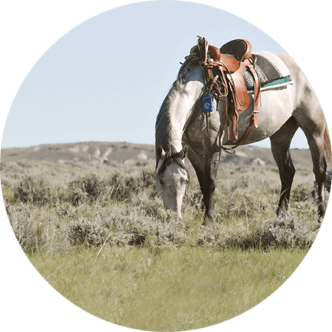
USDA rolls out insurance program enhancements
The U.S. Department of Agriculture’s (USDA) Risk Management Agency (RMA) announced a sweeping package of updates to its three flagship livestock insurance products – Livestock Risk Protection (LRP), Livestock Gross Margin (LGM) and Dairy Revenue Protection (DRP) – beginning with the 2027 crop year.
The changes, approved by the Federal Crop Insurance Corporation Board, expand coverage, modernize eligibility definitions and bring greater consistency across RMA’s livestock portfolio.
For USDA Farm Production and Conservation Under Secretary Richard Fordyce, the announcement lands at a pivotal moment for the cattle and dairy sectors.
“The ramp up of the program comes at a really, really important time,” Fordyce said in an interview. “When we’re seeing historic highs in feeder cattle and live cattle markets, the ability to protect this price or to ensure if the price goes down, you’ve got coverage is so important. The value of a producer’s herd or individual animal is so high it really is important to protect that investment.”
Livestock coverage under the federal crop insurance umbrella is a relatively new offering, but adoption has been staggering. Fordyce pointed to the program’s roots in the 2018 Bipartisan Budget Act and the rapid growth that followed.
“The first year in 2018, producers paid premiums of $13 million,” Fordyce said. “In 2025, the producer premium paid was $1.7 billion, so it’s a massive growth in risk management for livestock.”
Uniform changes across LRP, LGM, DRP
Several updates apply uniformly across all three programs.
RMA is adding subsidy capture language to address off-exchange contracts, updating the definition of beginning farmer or rancher and subsidy percentages to align with the One Big Beautiful Bill Act (OBBBA), permitting concurrent coverage between similar livestock programs, allowing policies that haven’t earned premium for three consecutive years to be canceled and revising transfer-of-coverage language.
“These updates expand coverage options, update eligibility definitions and strengthen program consistency across RMA’s livestock portfolio,” says RMA Administrator Pat Swanson. “These enhancements are another way we are putting farmers first. We want to ensure livestock and dairy operations across the country have the best tools available to manage risk.”
Fordyce emphasized the changes flow from two different streams.
“Part of this came from Congress. Part of this came from the board through input from the industry,” he said. “Cattle producers and dairy operations provided input and said, ‘If you could make these changes, it’s going to make it better and easier for us to participate and offer better assurances from a risk management standpoint.’”
Uniform changes across LRP, LGM and DRP include adding subsidy capture language to address off-exchange contracts, updating the definition of beginning farmer or rancher and subsidy percentages to align with OBBBA, permitting concurrent coverage between similar livestock programs, enabling policies which have not earned premium for three consecutive years to be subject to cancellation, revising transfer of coverage language to clarify when coverage can be transferred and updating general policy language for consistency with other RMA insurance policies.
A bigger door for new and beginning producers
One of the headline changes – drawn directly from the OBBBA – doubles the window during which new and beginning farmers and ranchers can access premium reductions.
“Right now, if you qualify for the new and beginning farmer definition, you basically get a cut in the premium for five years. It’s graduated depending on how many years you’ve been in the program,” Fordyce explained. “The OBBBA allowed for new and beginning farmers to take advantage of the premium reduction for 10 years now.”
He framed the change as a meaningful runway for young producers entering an expensive industry.
“New and beginning farmers are probably economically and financially more at risk than most others, so for this to allow them to participate with lower premiums for 10 years is really important,” he said.
Tailored updates by program
The popular LRP program, which insures against declining market prices at coverage levels from 75 to 100 percent of expected ending values, sees some of the most substantive changes.
RMA is expanding the forage disaster exemption to address extended drought and other natural disasters, increasing the maximum weight threshold for fed cattle types, extending cull cow coverage to a maximum of 52 weeks and adding three new feeder cattle types in the six to nine hundredweight range.
“Some of the provisions announced today are really meant to offer more clarity and align those programs to better fit the situation livestock producers see in their operations,” Fordyce said.
LGM, which protects cattle, dairy and swine producers against unexpected drops in gross margin, gets several technical but consequential updates. The maximum insurable weight for LGM cattle increases to 1,800 pounds.
The “target feeder cattle weight” maximum rises from nine to 12 hundredweight for yearling finishing operations and “target live cattle weight” maximums move from 15 to 18 hundredweight for yearling finishing and 13 to 16 hundredweight for calf finishing.
The “share” definition now requires producers to own calves for at least five months for yearling finishing or eight months for calf finishing.
DRP, which guards against revenue declines in milk production on a quarterly basis, receives a single but meaningful tweak – the sales period end date moves to the following calendar day, aligning DRP with the sales period structure used elsewhere in livestock insurance.
“You operate one program this way, you operate one program another way,” Fordyce said of the rationale. “Any time we can consolidate it eliminates confusion. It also eliminates the off chance someone didn’t completely understand how this program was administered and they miss an opportunity.”
Looking ahead
LRP, LGM and DRP are available to producers in all states and counties. Coverage is sold and delivered exclusively through private crop insurance agents, and a full list is available through the RMA Agent Locator at rma.usda.gov.
For Fordyce, the broader takeaway is the value of constant refinement informed by the people who use the programs.
“When you look at an average livestock operation, there’s significant investment. These risk management tools are in place to protect this investment,” he said. “Risk management is critical in this day and age, probably more so than it’s ever been.”
Jesse Allen is the vice president of national ag content for Farm and Ranch Media. This article was originally published by American Ag Network on May 18.