TAMU experts offer tips for protecting horses and livestock from wayward wildfires
Rural, wide-open spaces offer a peaceful life – except when the smoke and amber glow of a wildfire loom on the horizon. Whether a wildfire is quickly approaching or has ignited nearby, large animal owners must be prepared to protect their horses and livestock.
Dr. Kyle Johnson, a clinical assistant professor and Veterinary Emergency Team faculty member at the Texas A&M University (TAMU) College of Veterinary Medicine and Biomedical Sciences (VMBS), discusses methods to protect herds and homesteads against wildfires and how to safely evacuate animals during an emergency.
Environmental safety
Creating a protected and fire-conscious environment is key in slowing down or deterring a wildfire from reaching large animals and structures on a property. Property owners can do this by approaching fire safety in zones.
“Implementing features incompatible with fire growth can give owners vital time for evacuating livestock,” Johnson said. “The goal is to create a defensible space around a barn in case of an approaching fire.”
The first zone – called the immediate zone – is the first five feet around the barn or structure. This area should not contain any flammable materials such as plants, firewood and propane tanks.
Other tips to keep in mind for the immediate zone include keeping a structure’s roof, particularly its shingles, in good repair to prevent hot embers from igniting it; keeping gutters clean and free of flammable debris; regularly removing cobwebs from the structure and ensuring electrical systems, fans and lights are kept in working order.
“Next is the intermediate zone, which is roughly five to 30 feet from the barn,” Johnson said. “In this area, landscaping choices and routine maintenance can greatly reduce wildfire risks.”
Tips to keep in mind for the intermediate zone include choosing fire-resistant, drought-tolerant plants; using nonflammable groundcovers like stone or gravel instead of mulch; keeping grass mowed to less than four inches; pruning tree limbs and ensuring tree canopies do not extend to within 10 feet of a structure.
“Finally, the extended zone extends up to 200 feet past the intermediate zone,” Johnson said. “In this area, the goal should be to limit a wildfire’s path to a structure by removing dead trees and ensuring there is sufficient distance between neighboring trees.”
“It’s important to be aware of fire conditions in your area,” Johnson added. “These tools can help ranchers and horse owners know their area’s current fire risk and allow them to see actual fire incidents in their vicinity.”
Evacuation efforts
Despite having fire-resistance efforts in place, some wildfires may rage past defenses and infiltrate structures on a property, making evacuation necessary.
When evacuating animals from within a barn, Johnson recommends calmly but quickly haltering and leading them toward a secure pasture out of the fire’s path or off of the property altogether.
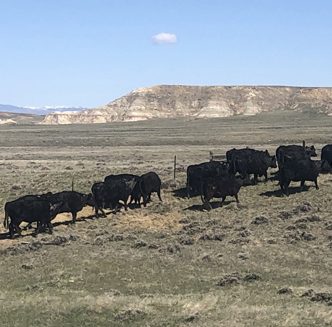
Wildfires may also blaze through pastures full of horses and livestock, which can present additional challenges.
“When faced with a wildfire, animals will follow their natural instincts and move away from it,” Johnson said. “When an animal is pastured, however, their ability to move away is limited.”
Evacuation is the best option, but it is not always possible as wildfires are unpredictable and can move quickly across open terrain.
“In an emergency situation, many ranchers will cut fences to allow horses and cattle to move away from the fire,” Johnson said. “It’s important to speak with neighbors to create a hypothetical plan, as the best option may be cutting a fence to allow animals to move onto a neighbor’s property.”
It’s best to avoid cutting fences allowing livestock access to roads, as this creates a hazard for both animals and drivers.
Identifying ownership
Once the wildfire has subsided, the next battle may be locating dispersed animals – a task made easy if they have an identifier.
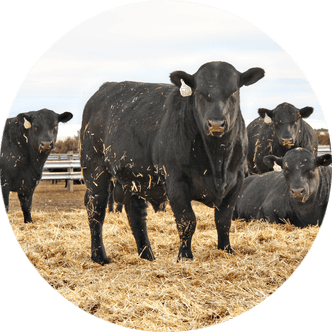
“It’s critical for horses and livestock to have proper permanent identification – like microchips, tattoos or brands – before disaster strikes so they can be returned back to their owners once the emergency is over,” Johnson said.
“There are also a variety of non-permanent forms of identification – both commercially available and homemade – which owners can use, including halter tags, plastic neck or ankle bands and shoe polish or spray paint to mark animals with a name or telephone number,” he added.
If ear tags or cattle brands are used, it’s important to properly register them with the county, if such a program is in place.
In addition to identification, it’s helpful to take photos of horses from all sides to ensure they are returned to their rightful owner post disaster.
In the midst of a wildfire emergency, horses and livestock depend on their owners to have a formidable plan to ensure their safety and well-being.
Wildfire preparation is not a suggestion – it’s a life-saving necessity to shield animals against flames that may reach their home.
Pasture Talk is a service of TAMU VMBS. Stories can be viewed at vet
med.tamu.edu/news/tag/
pasture-talk, and suggestions for future topics may be directed to vmbs-editor@tamu.edu. This article was originally published in Pasture Talk on May 21.