Diamond G Custom Leather and Rawhide: Talented Weston couple crafts wide variety of high-end, built-to-last items
Justine Nelson-Graham and her husband Chip Graham live near Weston where they work on a large ranch with a couple of good dogs and some nice horses. They also do leatherwork.
In fact, the couple has been into rawhide braiding, leathercraft and saddlemaking for many years.
Chasing a lifelong passion
Justine was born in the Magic Valley of Southern Idaho, where she grew up with horses and livestock. She notes she has always been fascinated by the Western way of life, especially horse tack and equipment unique to the ranching heritage.
As a child she enjoyed creating “horse gear,” using whatever materials she could find to build tack for her toy horses.
“When I was 15, I learned to braid leather from several books I found in the library, especially the writings of Bruce Grant,” she says, noting his books discussed the detailed process of braiding rawhide into functional horse tack.
She immediately began braiding anything she could get her hands on, including baling twine since she couldn’t afford leather.
“Eventually I learned to braid leather and began working with and tooling leather. I made a few saddles and opened my own custom leather shop. Then, in 2015, I had a chance to spend a few days attending Doug Groves’ rawhide braiding class,” Justine shares.
It was here she learned how to take a fresh cowhide through the curing and cutting stages and then braid the resulting strings into finished pieces.
In 2016 she worked with Traditional Cowboy Arts Association (TCAA) Braider Nate Wald.
Today, Justine says the complex process of turning a cowhide into finished products continually provides her with fresh challenges she finds very satisfying. She has continued to hone her skills in this craft, with the help of many top braiders in the industry like Wald, Leland Hensley and Jay Adcock.
In 2023, she also worked with TCAA Braider Pablo Lozano.
Honing her skills
Justine notes she has been honing her skills and “seriously” rawhiding for about 11 years now.
She processes her own rawhide and tries to find hides without a lot of fat under them.
She says the best hides to work with are from Longhorns, Corrientes and other similar breeds.
“Most of the hides I get come from the Turbivilles in Sundance who lease out a lot of Corriente cattle to ropers, then feed them out and butcher them when they come back,” she says. “They have cattle butchered every three weeks all year long, and they sell the meat at farm stands and farmers markets. I always know three weeks in advance some of those cattle will be butchered and I can get the hides.”
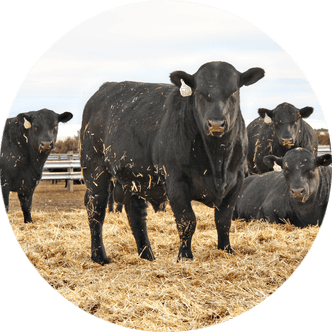
“So far, I like the Corrientes and the Longhorns best,” she reiterates. “If I can get a really skinny black cow, that’s not too bad either.”
Additionally, Justine shares, “I’ve worked through the TCAA Fellowship and have twice won the Rawhide Braiding Division of the World Leather Debut at the international competition in Sheridan, and I won the Cowboy Arts and Gear Museum’s Competition in Elko, Nev. last year.”
She also received the 2023 Wyoming Folk Arts Council Mentoring Grant and was the 2024 Wyoming Folk Arts Professional Development Grant recipient.
Establishing Diamond G
According to Justine, Diamond G Custom Leather and Rawhide was established after she met her husband Chip, a fellow leathercrafter.
Chip started doing leatherwork at a young age as well, while he was involved in 4-H.
“I met an old cowboy in Deming, N.M. where I was raised, and he had a leather shop. I always wanted a good saddle, so he helped me build my first one – completely out of necessity because I couldn’t afford one,” Chip says.
After they were married, the two began brainstorming how to market a business together while maintaining the individuality of their work.
“We eventually decided to set up a website under the name of our Wyoming cattle brand – Diamond G,” Justine says. “It’s still a work in progress as we have each been building leather goods under our own names for a long time – around 20-plus years for me and even longer for Chip.”
She adds, “I believe it’s still important to maintain our identities as separate makers, yet highlight the broad diversity our work together brings.”
Together, the couple makes a wide variety of work. While Justine focuses on the detailed, decorative work like leather tooling and handcrafting high-end items, Chip does more of the saddlemaking and creating “the kind of tack that is built to take the wear-and-tear and beatings of hard use in the brush,” according to Justine.
They make a good team and often combine their talents to complete many projects.
“I find a lot of satisfaction in taking a hide that might otherwise go to waste, and turning it into items that are functional, durable and beautiful,” she states. “Being able to use the gear I build and to see it used by others gives me great pleasure.”
Justine also mentions, while she and Chip primarily make new things, they also offer limited repairs during winter months when they have more time.
“Now and then we can also fit in an emergency repair for an existing client,” Justine notes. “Some of our clients started out by having us do a repair and then came back to look at the new stuff and will often spend more money with us the next time.”
Ranching in Wyoming
Today, all of Justine and Chip’s work is created in their downstairs workshop and backyard machine shop where they live on a ranch owned by Bert Huntington, which they also manage.
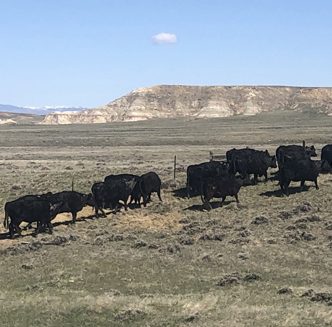
Justine says she has been working as a “camp man” on the ranch for over 20 years, and the place where she and Chip reside serves as the operation’s summer pasture. The gig works out perfectly since cattle are moved in the winter, giving the two plenty of time to focus on their craft.
When cattle are around, Justine and Chip note they both appreciate good horses.
“We try to do as much of the cattle work as possible on horseback,” Justine says. “A lot of our summer pasture is pretty rough, and we can’t gather cattle any other way. It’s easier with a horse, and it’s also so much more enjoyable.”
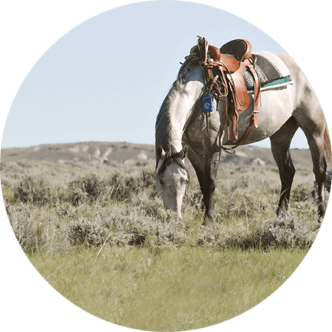
They have also found owning horses and knowing their way around a horse has come in handy when making tack. This way, they are able to fully understand how tack is supposed to fit and can use their own horses for taking measurements, making modifications and even finding inspiration.
“Someone might call us and say they are trying to get something to fit their horse, and we might have a similar horse so we can see what would work,” Justine says. “Our horses are our guinea pigs and our models.”
“I’ve also had several horses that seemed to take great joy in breaking things, so I’ve learned a lot about what needs to be built a little bit sturdier to work,” she adds. “We enjoy making tack, and every bit of tack on our horses is something we’ve made, with the exception of the metal bits and pieces.”
For more information on Diamond G Custom Leather and Rawhide, visit diamondgleather.com.
Heather Smith Thomas is a corresponding writer for the Wyoming Livestock Roundup. Send comments on this article to roundup@wylr.net.