Ranches Face a Generational Crisis and Virtual Fencing Can Help
By Travis Brammer
Anyone who grew up on a family farm or ranch knows fence work is never complete. It breaks, sags, drifts and disappears under snow, and somehow, fence repair always seems to fall on blizzard days, holidays or the hottest afternoon of the year.
This is just one of the many back-breaking, never-ending jobs that defined my childhood and life on working land.
Those daily burdens add up. Combined with increasingly thin margins, they are pushing younger people away from agriculture.
In 2024, more than half of American farmers and ranchers reported operating at a loss. Today, the average U.S. farm or ranch owner is 58 years old. Meanwhile, the number of farmers and ranchers between the ages of 35 and 64 declined by nearly 10 percent between 2017-22.
This is not just a demographic trend, it is a quiet conservation crisis.
As older landowners retire, many have no successor ready to step in. When ranches do not transfer to the next generation, they are far more likely to be subdivided or converted to non-open space.
According to the American Farmland Trust, nearly 300 million acres of U.S. farm and ranchland, almost the size of Alaska, are expected to change hands in the coming decades. What happens to this land will shape wildlife habitat, water resources, rural communities and open spaces across the country.
If conservation depends on keeping land intact and working, then keeping ranching viable for the next generation matters more than ever.
A promising new tool
Virtual fencing offers a promising new tool to meet the challenge. This emerging technology simplifies ranch management, reduces physical labor and provides a level of flexibility those stubborn traditional fences could never match.
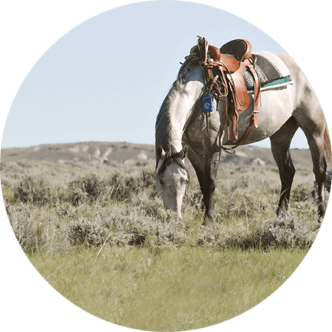
Virtual fencing relies on GPS-enabled collars worn by livestock which communicate with small radio towers and satellites. Much like invisible fences for pets, virtual fencing collars guide animals using basic audio cues and electrical signals.
Ranchers can repeatedly create, adjust and digitally move boundaries, in near real time. Moving a fence during a snowstorm is a lot easier when all it takes is a few taps of a finger on a tablet.
The implications are significant. Virtual fencing can dramatically reduce the need for miles of costly and burdensome physical fence. It can help ranchers locate livestock more easily, respond faster to changing conditions and avoid permanent barriers that fragment wildlife habitat.
It can also be a conservation asset by aiding passage for migratory wildlife, protecting sensitive rivers and streams and improving rangeland health in ways that create both ecological and economic value.
Equally important, it speaks the language of the next generation of land stewards.
Most current landowners grew up in an analog world. The next generation is fluent in digital tools. Managing livestock through an app, monitoring animal movement in real time and adapting grazing plans on the fly transforms ranching into a modern profession.
Young ranchers are already using virtual fencing to test innovative grazing strategies, protect wildlife habitat, respond to animal health or predator conflict concerns and adapt to drought and flood conditions.
Yet the upfront cost of the technology remains a barrier, especially for family operations operating on thin margins. This is where conservation organizations are making a difference.
The Virtual Fence Conservation Fund
My organization, the Property and Environment Research Center (PERC) created America’s first Virtual Fence Conservation Fund, which shows how targeted investment can accelerate adoption while delivering real conservation outcomes.
The fund has issued nearly half a million dollars in grants to help ranchers implement virtual fencing to date. In doing so, we’re helping ranchers experiment with the technology, refine best practices and demonstrate its value.
As adoption grows and systems improve, costs decline, making virtual fencing more accessible to producers across the West and beyond.
The fund helps ranchers stay in business today while supporting innovation which will define the future of land stewardship. It also ensures conservation benefits such as healthier rangelands, improved wildlife habitat and more resilient working landscapes are built directly into the economics of ranching.
For many like me who grew up on a ranch, the prospect of managing livestock more efficiently – and with fewer constant headaches – might be enough to consider coming back home.
Virtual fencing will not replace mentorship, patience or an unrelenting love of the land, but it can help the next generation step into those roles with confidence and help improve what they inherit.
In this sense, virtual fencing is not just a conservation tool. It is an invitation to the future of land stewardship.
Travis Brammer is director of conservation at PERC, a nonprofit institute based in Bozeman, Montana. This opinion column was originally published by AgriPulse on Feb. 24.