U.S.-Taiwan Agreement on Reciprocal Trade expands market access for agriculture
On Feb. 12, the U.S. and Taiwan signed a sweeping trade agreement, marking a significant milestone in economic relations between the two countries and delivering expanded market access for U.S. exports.
Announced by the Office of the U.S. Trade Representative, the U.S.-Taiwan Agreement on Reciprocal Trade (ART) eliminates or reduces 99 percent of Taiwan’s tariff barriers and addresses longstanding non-tariff obstacles.
Ambassador Jamieson Greer attended the signing ceremony in Washington, D.C., under the auspices of the American Institute in Taiwan and the Taipei Economic and Cultural Representative Office in the U.S.
Taiwan Vice Premier Li-chiun Cheng and Minister Without Portfolio Jen-ni Yang were also in attendance.
“President Donald Trump’s leadership in the Asia-Pacific Region continues to generate prosperous trade ties for the U.S. with important partners across Asia, while further advancing the economic and national security interests of the American people,” Greer states in a Feb. 12 press release.
“The ART with Taiwan will eliminate tariff and non-tariff barriers facing U.S. exports to Taiwan, furthering opportunities for American farmers, ranchers, fishermen, workers, small businesses and manufacturers,” Greer adds.
“This agreement also builds on our longstanding economic and trade relationship with Taiwan and will significantly enhance the resilience of our supply chains, particularly in high-technology sectors. I want to thank my counterparts from Taiwan for their strong commitment to achieving fair and balanced trade with the U.S,” he continues.
Major gains for agriculture
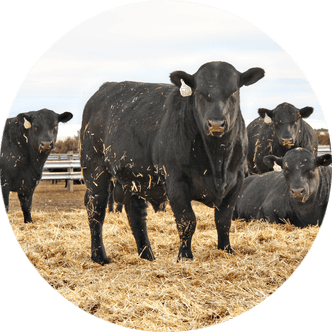
The agreement was met with a positive response across the U.S. cattle industry, as it is set to eliminate tariffs on U.S. beef and reinforce science-based standards consistent with international benchmarks, including the World Organization for Animal Health and Codex Alimentarius.
The National Cattlemen’s Beef Association (NCBA) praised the deal for granting duty-free access for U.S. beef exports to Taiwan, which is currently the sixth largest export market for U.S. beef, valued at $709 million in 2024.
According to NCBA’s Feb. 12 press release, beef exports accounted for more than $415 per fed animal processed in 2024, underscoring the importance of international markets to producer profitability.
“Strong, science-based trade agreements are essential to adding value for U.S. cattle producers, and Taiwan has emerged as one of the strongest international markets for U.S. beef,” says NCBA President Gene Copenhaver. “Duty-free access improves competitiveness and provides long-term certainty for producers who depend on export markets to maximize the value of every animal.”
The U.S. Meat Export Federation (USMEF) also welcomed the agreement, emphasizing Taiwan’s role as a top-tier beef market, and noting although the U.S. is already Taiwan’s largest beef supplier, USMEF officials believe there is room for further growth.
In a statement released the same day as the USTR’s announcement, USMEF President and Chief Executive Officer Dan Halstrom says expanded access for all U.S. beef products – including cuts popular in yakiniku barbecue and emerging burger concepts – will enhance competitiveness and unlock new demand.
In addition to beef, the agreement also delivers important gains for other red meat.
According to USMEF, U.S. pork exports have long faced disadvantages in Taiwan, where competitors such as the European Union and Canada dominate the import market. However, the agency expressed optimism reducing both tariffs and non-tariff barriers will help U.S. pork regain footing in the Taiwanese market, particularly as the organization continues efforts to rebuild consumer trust.
“The agreement also includes important language clarifying access for U.S. bison and eliminates tariffs on U.S. lamb,” Halstrom states.
In addition, the official ART Fact Sheet notes Taiwan agreed to resolve and prevent non-tariff barriers affecting U.S. agricultural exports including beef, pork, poultry and processing potatoes and provide preferential market access for horticultural products, wheat, beef and beef productions, dairy products, pork and pork products, lamb and sheep, tree nuts, dog and cat food, ketchup and peanuts.
Broader industrial and regulatory reform
While the ag industry is certainly set to benefit from the agreement, provisions in the ART extend far beyond.
According to the fact sheet, Taiwan will provide preferential access for a wide range of U.S. industrial exports as well, including autos and auto parts, chemicals, machinery, health products, electrical products, minerals, metals and seafood.
The agreement resolves longstanding barriers affecting U.S. motor vehicles, medical devices and pharmaceuticals by accepting U.S. Federal Motor Vehicle Safety Standards and U.S. Food and Drug Administration marketing authorizations without additional requirements.
The deal also includes groundbreaking provisions regarding geographical indications, with Taiwan committing to transparency and fairness standards, which ensures U.S. cheese and meat producers can continue using common product names without facing unfair market restrictions.
Intellectual property protections are strengthened through the deal, with Taiwan committing to enhanced enforcement aligned with key international treaties.
The agreement further addresses labor standards, prohibiting the importation of goods produced with forced labor and improving protections for workers in certain sectors.
Environmental commitments include enforcement of environmental laws and measures targeting illegal logging, fisheries subsidies and wildlife trade.
Another notable section of the agreement focuses on supply chain resilience and high-tech collaboration.
Both countries highlight cooperation in semiconductors, electronics manufacturing services, energy and other critical sectors.
A memorandum of understanding signed in January outlines plans for Taiwan companies to increase investment in U.S. semiconductor supply chains and related industries and, in turn, the U.S. will consider preferential treatment for Taiwan in certain tariff and trade remedy contexts.
Taiwan also plans to substantially increase purchases of U.S. goods between 2025-29, including $44.4 billion in liquefied natural gas and crude oil, $15.2 billion in civil aircraft and engines and $25.2 billion in power equipment and related infrastructure.
A path forward
From here, the agreement will undergo domestic formalities, including legislative review in Taiwan, while the U.S. has committed to adjusting tariffs on Taiwanese goods in recognition of Taiwan’s reciprocal steps.
“On April 2, 2025, President Donald Trump declared a national emergency in response to the unprecedented threat caused to the U.S. by the large and persistent trade deficit due to a lack of reciprocity in bilateral trade relationships, disparate tariff rates and non-tariff barriers and U.S. trading partners’ economic policies which suppress domestic wages and consumption,” reads the fact sheet.
“Trump continues to help U.S. farmers, ranchers, fishermen, small businesses and manufacturers to increase U.S. exports to and expand business opportunities with trading partners,” it continues. “This announcement provides a tangible path forward with Taiwan underscoring the president’s dedication to bringing balanced, reciprocal trade with an important trading partner.”
Hannah Bugas is the managing editor of the Wyoming Livestock Roundup. Send comments on this article to roundup@wylr.net.