Rancher testifies in support of Grasslands Grazing Act
On Feb. 12, Fiddleback Ranch Owner and Operator and Association of National Grasslands President Ty Checketts of Newcastle testified before the Senate Energy and Natural Resources Subcommittee on Public Lands, Forestry and Mining in support of the Grasslands Grazing Act of 2025.
The legislation, Senate Bill (S.2787) was introduced by U.S. Sen. John Barrasso (R-WY), who chairs the subcommittee, and a companion measure, House Resolution 6300, has been introduced in the House by U.S. Rep. Harriet Hageman (R-WY).
During his testimony, Checketts urged lawmakers to pass the bill, saying he believes it will bring long-overdue fairness and certainty to producers who graze livestock on national grasslands.
“The proposed legislation simply seeks to give national grasslands permittees the same due process rights the Bureau of Land Management (BLM) and national forest permittees currently enjoy,” Checketts states “S.2787 will provide for stable and secure 10-year grazing agreements and permits. The modification sought by this legislation will, in fact, create a more uniform, equitable and less confusing framework for the relationship between U.S. Forest Service (USFS) managers and their rancher partners across the western portion of the U.S. I thank you for your consideration and urge the committee to advance this bill.”
Federal grazing in the West
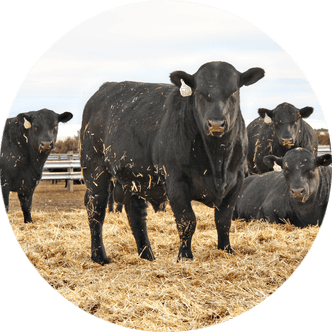
Prior to his testimony, Barrasso introduced Checketts to the subcommittee, noting he and his wife Becky own and operate Fiddleback Ranch, where they run roughly 1,000 head of Black Angus cattle on public and private land.
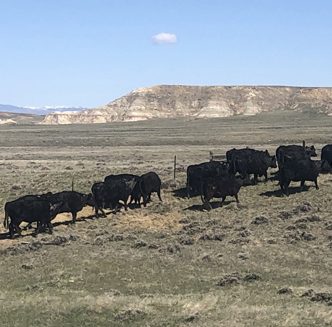
Based in Newcastle, the couple is located immediately adjacent to the Thunder Basin National Grassland, which encompasses more than half a million acres in northeast Wyoming.
“In Wyoming, cattle graze on the Thunder Basin National Grassland,” Barrasso states. “Ranchers across the West depend on access to grazing on our national grasslands. They deserve to have certainty their grazing permits will be approved in a timely manner. The Grasslands Grazing Act of 2025 will give Wyoming’s ranching families the stability they need to keep their operations running strong.”
Checketts echoes this sentiment, explaining in states like Wyoming – where the federal government owns or controls significant acreage – integrating federal grazing allotments is often the only way to sustain cattle and sheep production at scale.
“Without the ability to graze on national grasslands, there would not be enough forage for my livestock nor enough private land to access additional forage to be able to ranch in Wyoming,” he says.
Checketts goes on to note more than 60 percent of the beef herd and more than half of the breeding ewe population in the West spend time grazing on federal lands, and he argues national grasslands, which are managed by USFS, often boast some of the highest-quality forage in the federal land system.
Checketts also asserts well-managed livestock grazing supports ecosystem health.
“Grasslands are diverse ecosystems, and grazing is the best way to manage them,” he states. “As an ecosystem, grasslands cover approximately 25 percent of the Earth’s surface and store approximately 34 percent of the world’s carbon. The national grasslands managed by USFS are no different, and grazing is the best way to ensure biodiversity and ecosystem resilience.”
“Grazing – and the way we manage our rotations – mimics historic management of the grasslands and promotes retention of native grasses, fights the encroachment of invasive species and reduces fire risk,” he adds.
Addressing a longstanding inequity
At the heart of the legislation is a change to the Federal Land Policy and Management Act of 1976 (FLPMA), which governs grazing permits and agreements on federal lands.
While FLPMA provides certain tools and due process protections to permittees grazing lands managed by BLM and USFS, those same protections were not extended to permittees on national grasslands.
As a result, ranchers operating on national grasslands have faced greater uncertainty in permit renewals and fewer legal safeguards.
Checketts explains the Grasslands Grazing Act of 2025 would amend FLPMA by replacing the words “lands within national forests” with “National Forest System lands,” effectively bringing national grasslands permittees under the same umbrella of protections.
These protections include the ability to hold a 10-year grazing permit, a preference position for renewal of permits upon expiration, written notice of violations and an opportunity to correct them before cancellation or suspension and a requirement for two years’ notice before permit cancellation, except in emergencies.
“The Grasslands Grazing Act of 2025 remedies a longstanding inequity among grazing permittees which currently limits the due process protections for ranching operations on national grasslands,” says Checketts. “This bill would simply extend legal tools available to other permittees to ranchers who steward the four million acres of national grasslands.”
“Without these tools, it is harder to pass the ranching operation down to the next generation. Providing certainty for grasslands permittees helps to ensure producers can carry on the American tradition of ranching,” he adds.
Planning for the future
In his testimony, Checketts also emphasizes longer-term, more secure permits are about more than paperwork – they are about long-term land stewardship and business viability.
A 10-year permit allows producers to plan investments in infrastructure such as fences, pipelines, water troughs and forage improvements. It also provides greater financial stability when seeking capital, as lenders view longer-term permits as a more secure asset.
“This business stability is crucial for the health and sustainability of rangelands, grasslands and rural communities – each of these grazing agreements and permits are tied to management of a base property,” he says. “Without the ability to plan for a longer-term grazing rotation and business operations, permittees face challenges in whether to continue operations.”
“Loss of an allotment or grazing association permit puts increased pressure on their private land and can lead to a producer selling out,” Checketts continues. “Lack of predictability affects producer retention and even the ability to recruit additional, new permittees over time.”
Further, Checketts points to demographic realities within agriculture, noting the average age of U.S. ranchers is 58.1 years old, and more than 70 percent of farm and ranch land is expected to change hands in the next two decades.
“Without long-term predictability, many operations will face the decision of whether to sell or gamble on future forage availability,” he states. “Providing tools for grasslands permittees which are already available to BLM and USFS permittees will give young ranchers more confidence to continue the long legacy of stewardship and continue producing high-quality protein as part of our national food security.”
Clarifying intent
Before wrapping up his testimony, Checketts urged lawmakers to ensure the bill’s intent remains focused on extending due process protections without unintentionally altering other longstanding programs governing national grasslands.
He emphasizes existing conservation practices, exemptions under the Public Rangelands Improvement Act and the current system of grazing agreements for associations should remain intact.
“The modification sought by this legislation will, in fact, create a more uniform, equitable and less confusing framework for the relationship between USFS managers and their rancher partners across the western portion of the U.S.,” he says.
Hannah Bugas is the managing editor of the Wyoming Livestock Roundup. Send comments on this article to roundup@wylr.net.