Merlin and Gordon Ranches: the Gordons stay focused on future of Wyoming ag
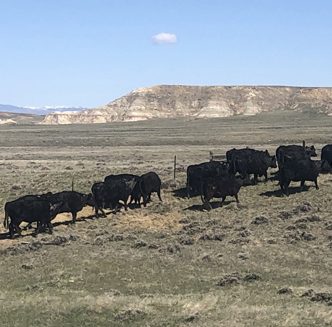
Tucked within the red scoria hills just outside of Buffalo lies the Merlin Ranch, a cow/calf operation owned by Gov. and First Lady of Wyoming Mark and Jennie Gordon.
In nearby Kaycee, the governor’s homeplace, the Gordon Ranch continues to support cattle and hay production.
Driven by a love for Wyoming’s rich agricultural community, the Gordons are passionate about promoting and protecting the ranching way of life.
Their work as ranchers and with the state of Wyoming is dedicated to ensuring the Cowboy State’s rich agricultural heritage continues for generations to come.
Local roots
Mark was sworn into office in January 2019. Although they now spend the majority of their time at the Governor’s Residence in Cheyenne, the Gordons are from Johnson County and return to the ranch as often as their schedules allow.
Mark grew up on a ranch near Kaycee, which is still in the family and is managed in partnership with his sister and brother-in-law Val and Doug Johnson.
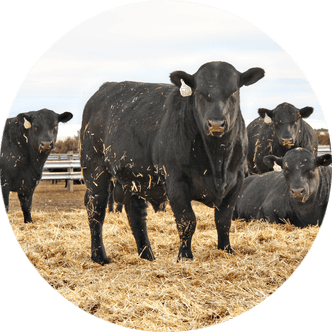
The Gordon Ranch has roots in the Hereford industry, but Mark says the family began to embrace and incorporate Angus genetics around the 1970s.
He moved to the Merlin Ranch in 1988 and assumed operations from the Wrights, who were close family friends and wanted to ensure the land stayed in agriculture.
On the Merlin Ranch, Mark began to incorporate management methods which still drive the operation today, with a specific focus on environmental stewardship.
Jennie moved to Johnson County in 1980. She was working as a laboratory technician at the Sheridan Hospital when she first met Mark, and she jumped into ranching full time shortly after the couple’s marriage in 2000.
Jennie says she initially learned the ropes of ranching by keeping books for the Merlin Ranch and quickly became passionate about “building her toolbox” of ranching skills following the examples of neighbors, family and leading livestock experts.
Management practices
Mark says growing up on the family ranch taught him the importance of patience and strategy with livestock handling.
“As a kid on a ranch, you learn you can’t hoop, holler, whip and spur,” says Mark. “You have to figure out ways to be a little more thoughtful.”
A focus on total ecosystem health has also been central to management of the Merlin Ranch and Mark’s ranching philosophy for decades.
In fact, Mark says he was able to expand the ranch through a unique agreement with the Ucross Foundation which placed a focus on environmental stewardship.
“The Ucross Foundation had a neighboring ranch near the Merlin Ranch, and they were trying to find somebody to run it,” says Mark. “We approached the foundation and asked, ‘If we improve the ranch and can demonstrate better grass production, water retention, husbandry and overall management, will you consider lowering the lease?’ And they agreed.”
The Merlin Ranch utilizes rotational grazing practices to encourage grass production and water retention, ensuring healthy cattle and pastures from the ground up.
Ranch managers tend to cattle on both the Gordon Ranch and the Merlin Ranch, providing quality care across every aspect of the diverse operations.
“We have two really great ranch managers,” says Mark. “The ones on the Gordon Ranch have been there almost 20 years, and the ones on the Merlin Ranch have been there for about 16.”
“As we’ve expanded, we’ve allowed our employees to have a piece of the operation too,” Mark continues.
In his work in state office and on the ranch, Mark believes in contributing to avenues to help people get established and stay rooted in ag.
Securing the future
Mark and Jennie both agree ag is the backbone of Wyoming and America.
As such, they are devoted to recognizing the hard work of ranchers and supporting the ag industry throughout the Cowboy State.
In October 2025, Mark launched the Cowboy State Agricultural Initiative – a working group dedicated to promoting ag education and supporting ranchers across Wyoming.
The initiative places a specific emphasis on supporting young producers and promoting management practices which ensure agriculture is accessible and attractive to future generations.
“I am intensely concerned with keeping Wyoming farms and ranches operational,” says Mark. “We have to make it possible for younger people to get into ranching and farming.”
“As ranchers, we are independent and can do for ourselves, but we also have a responsibility to help our neighbors,” he continues.
“Ag does a lot for us,” adds Jennie, highlighting the exceptional generosity of Wyoming ranchers who have contributed to programs within the Wyoming Hunger Initiative like Beef for Backpacks.
“Ag feeds the world, and it cares about communities so deeply,” she continues. “I feel so blessed to be a part of the industry.”
For more information on Merlin Ranch, visit merlinranch.com. To learn more about the Cowboy State Agricultural Initiative, visit agriculture.wy.gov/index.php?section=cowboy-state-ag-initiative.
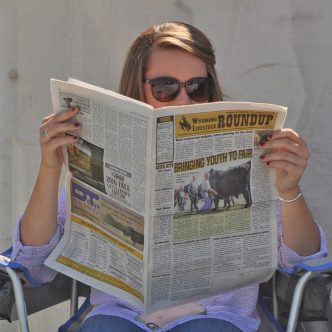
Grace Skavdahl is the editor of the Wyoming Livestock Roundup. Send comments on this article to roundup@wylr.net.